Bike
Moto Guzzi Stelvio
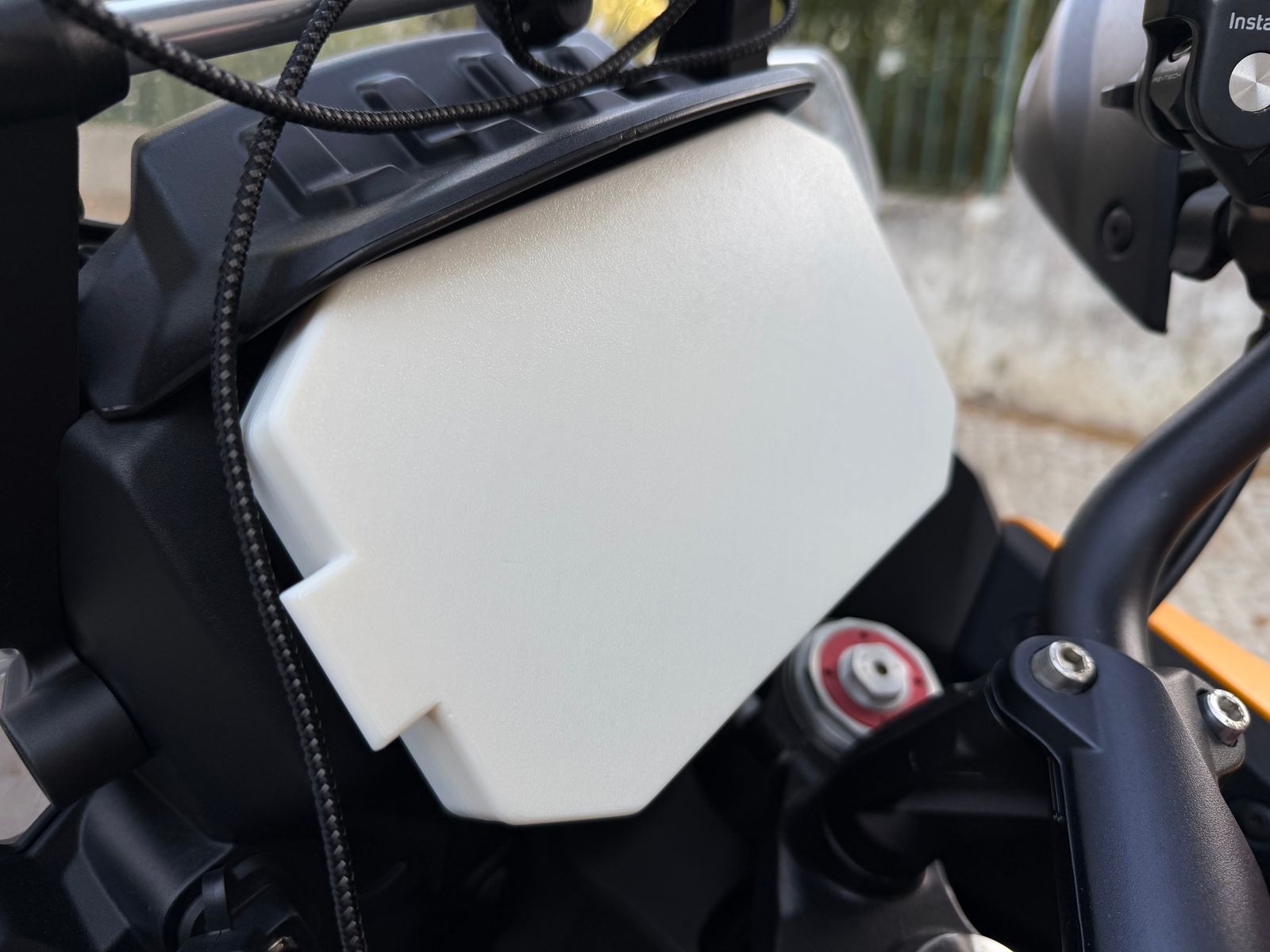
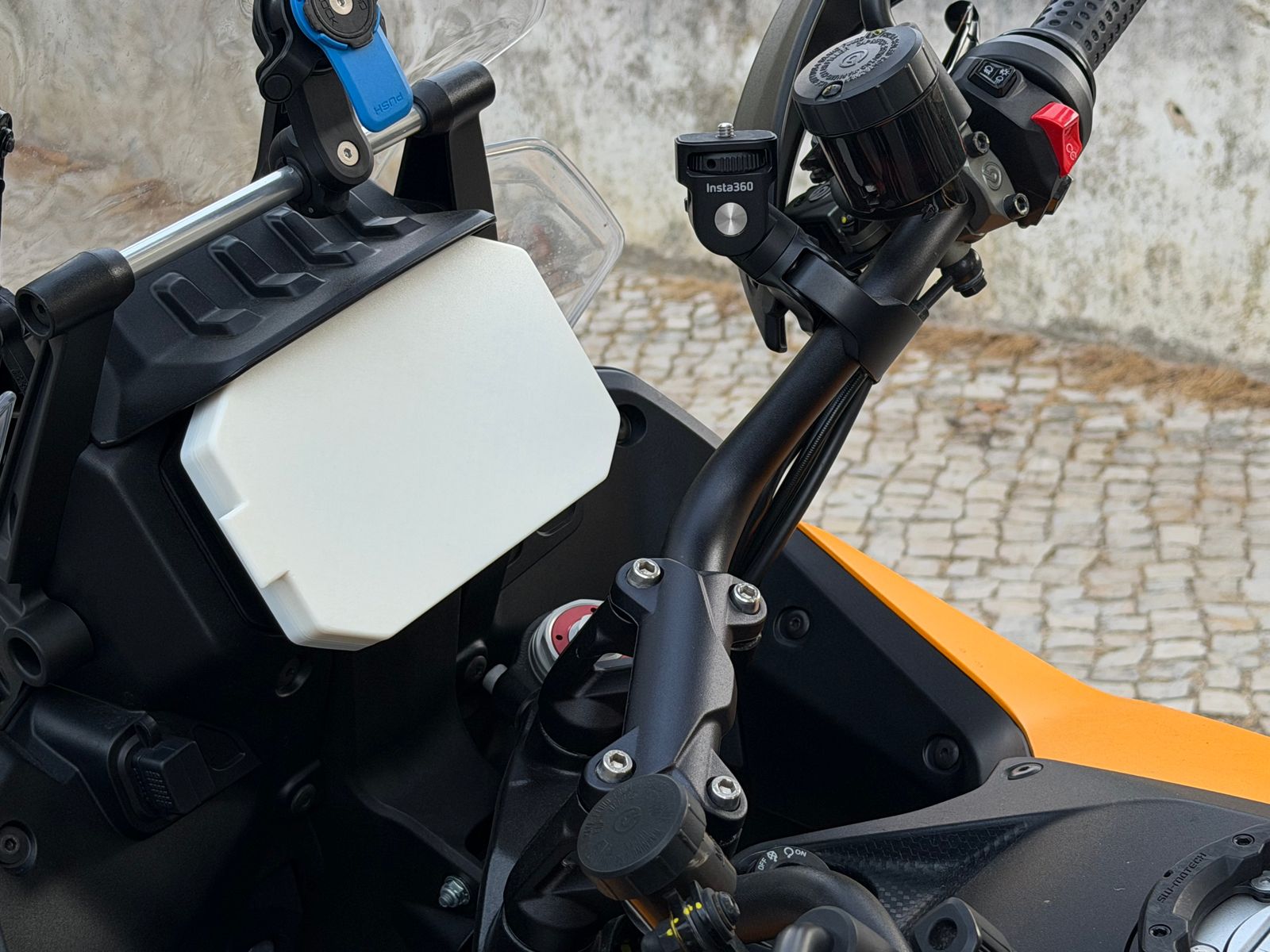
A Moto Guzzi Stelvio owner in Cascais wanted the bike's 12.7 cm TFT dash covered while the bike sits parked in the Portuguese sun. Nothing on the market fitted. Moto Guzzi's own accessory catalogue lists no dash cover for the Stelvio, and neither do Hepco & Becker, Wunderlich or Touratech. We scanned the screen surround on the bike, checked it by hand with a rule, modelled the cover in CAD, and printed it in two materials: a white ASA shell for UV and heat stability, and a separate TPU 85A seal that grips the surround with 0.3 mm of interference per side. Stand-offs inside the shell land on the metal bezel, so nothing touches the glass. Vent slots at two heights let cool air in low and warm air out high, so heat moves out instead of building up. It goes on and comes off by hand, and it comes off before riding. Delivered 31 July 2026.
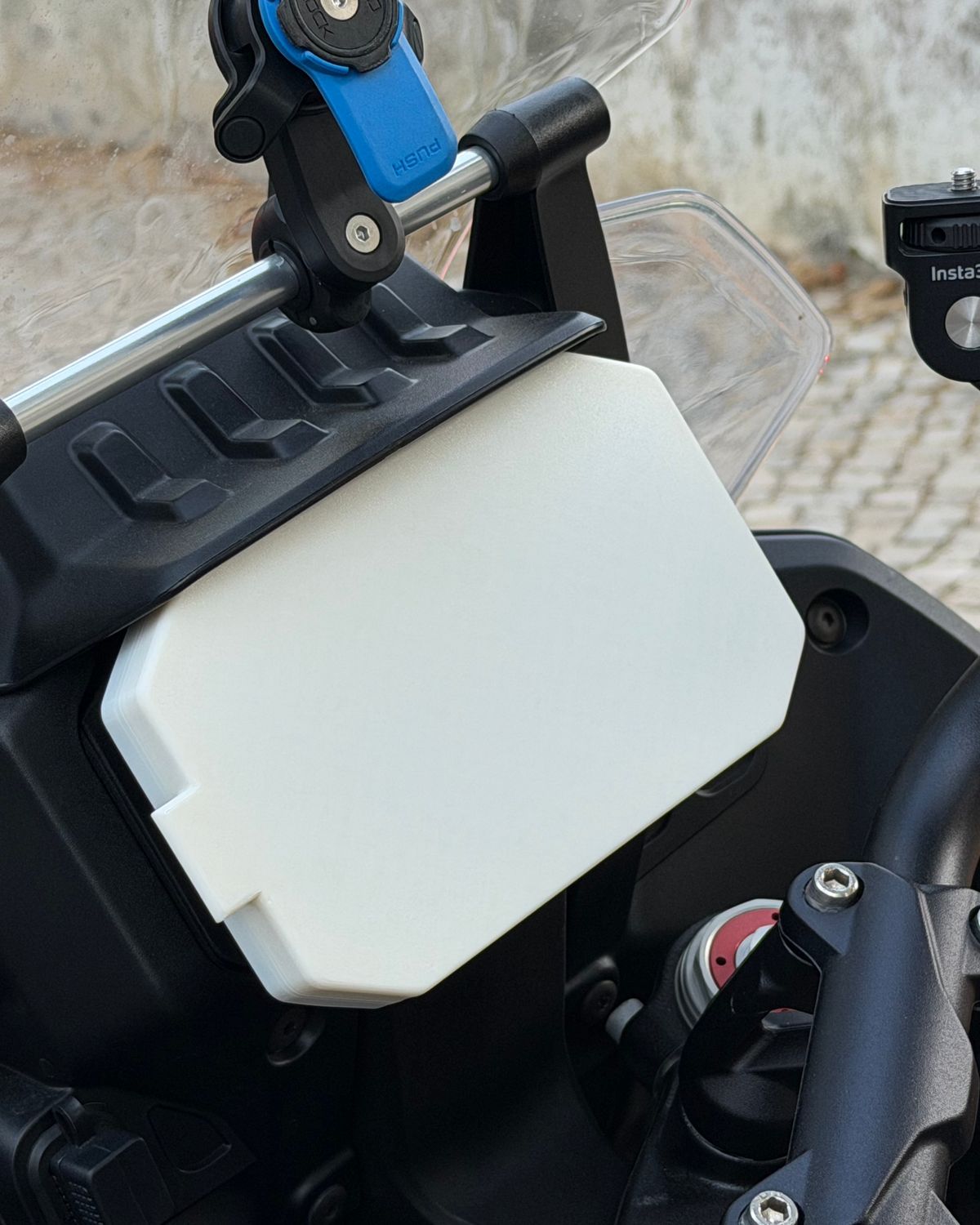 Installed · Cascais · 31 July 2026
Portugal is hard on plastics and displays. A bike left outside on the Estoril coast spends hours a day under direct sun and high UV, and the instrument screen is the part of the bike least able to shrug it off. The owner of this Stelvio wanted a cover he could drop over the screen whenever the bike was parked and take off before riding. He did not want a film stuck to the glass, or a hood sitting in his eyeline on every ride.
He had already looked. The two things the market sells are adhesive screen films, which do nothing about heat, and rigid riding visors, which are made for the bikes that sell in volume. We went looking too, and could not find a dash cover or visor listed for the Stelvio anywhere:
| Where we looked | Dash cover for the Stelvio |
|---|---|
| Moto Guzzi official accessories | None listed. Cases, windshield, guards, heated grips, electronics |
| Hepco & Becker, Stelvio 2024 | None listed across the full accessory range |
| Wunderlich, instrument visors | BMW and Harley-Davidson only |
| Touratech | Moto Guzzi is not in the bike selector |
| Printables and MakerWorld | No published model for this screen |
Checked 11 August 2026. If that changes, email us and we will update this table.
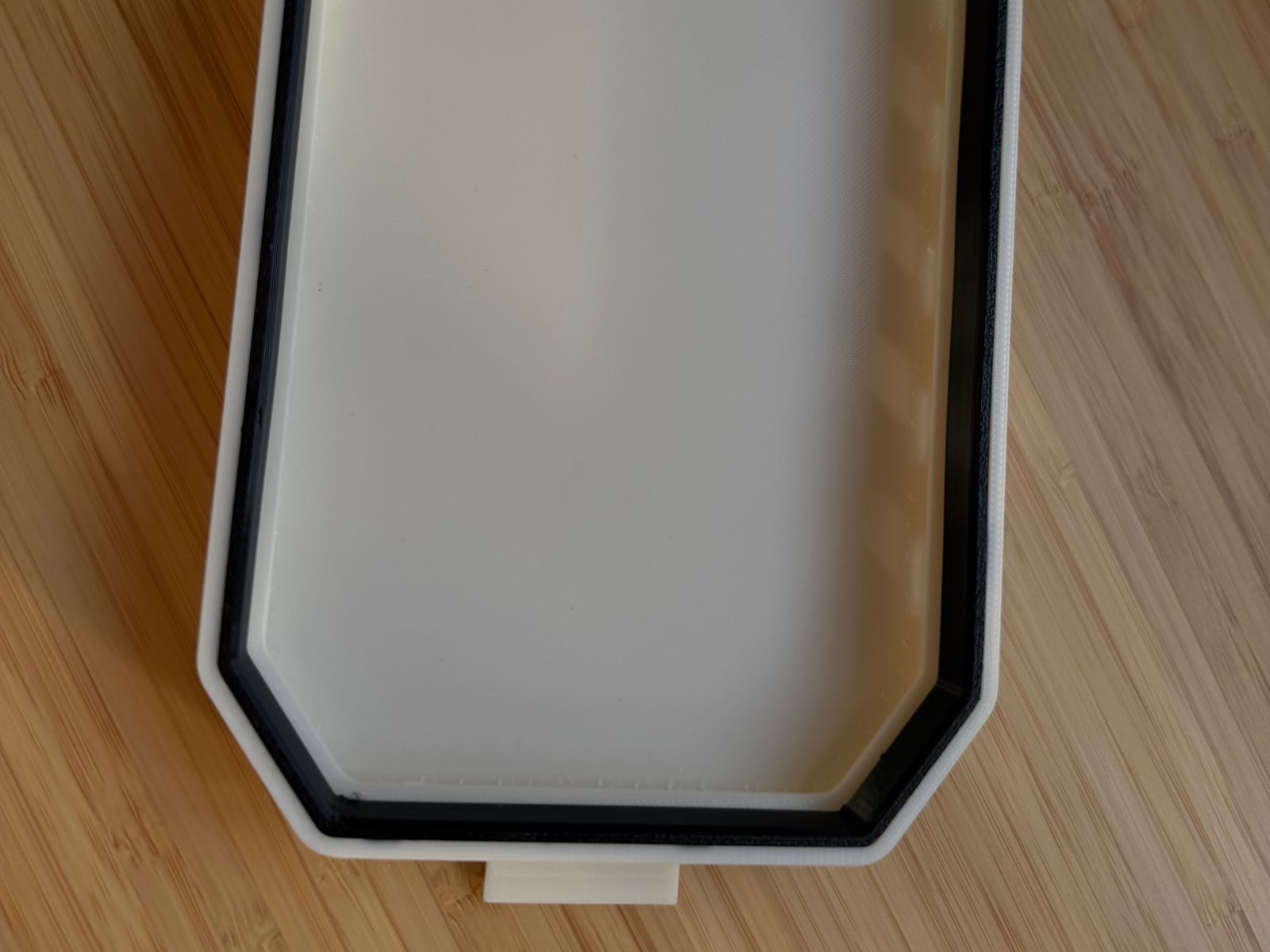
The screen surround was captured on the bike: 3D scanned, then checked by hand with a rule. The scan gives the shape; the rule confirms it. From that we built the cover in CAD as two separate parts: a rigid shell that does the shape, the stiffness and the shading, and a flexible frame that does the gripping.
Before committing to a full print, we printed half the shell and took it back to the bike. It sat correctly, but the seal was tighter than it needed to be, so the way the TPU frame seats into the shell was changed before the first complete cover was printed. That is the reason the finished cover seats with light hand pressure.
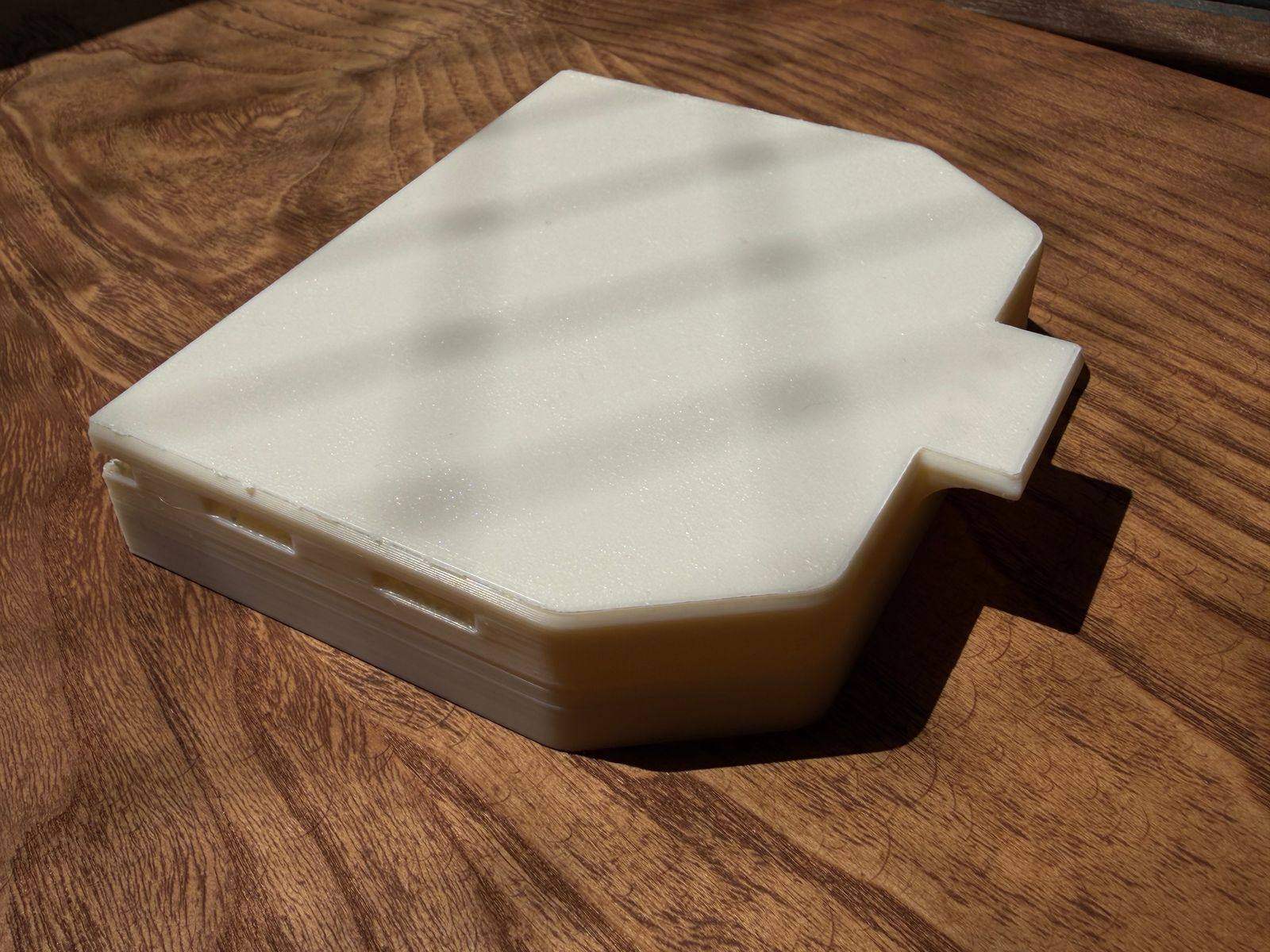
It would, if it were sealed. A closed box over a dark instrument panel in direct sun is a worse place for a display than no cover at all. You swap direct radiation for a hot, still pocket of air.
So the shell is vented on the sides, and the slots sit at two different heights. Cool air enters through the low slots, picks up heat off the panel, rises, and leaves through the high slots. The cavity convects on its own instead of baking. It is the same principle as a ridge vent in a roof.
The TPU 85A frame grips the screen surround with 0.3 mm of interference on each side, enough for the cover to stay put in wind and little enough to pull off by hand. Above that frame sit stand-offs that come down onto the metal bezel around the display and stop there. They set the cover's height, so the shell floats over the screen with an air gap under it and no part of the assembly ever rests on the glass.
The cover is water-resistant, not waterproof. ASA and TPU both cope with rain, but this is a sun and UV cover with vents in it, not a rain seal.
ASA for the shell. It is the most practical filament we know for a part that lives outdoors: it holds up to UV without yellowing or going chalky, and it stays dimensionally stable when it gets hot, which PLA does not. PETG survives the sun better than PLA but softens earlier than ASA, and this part spends its life in the hottest, brightest place on the bike.
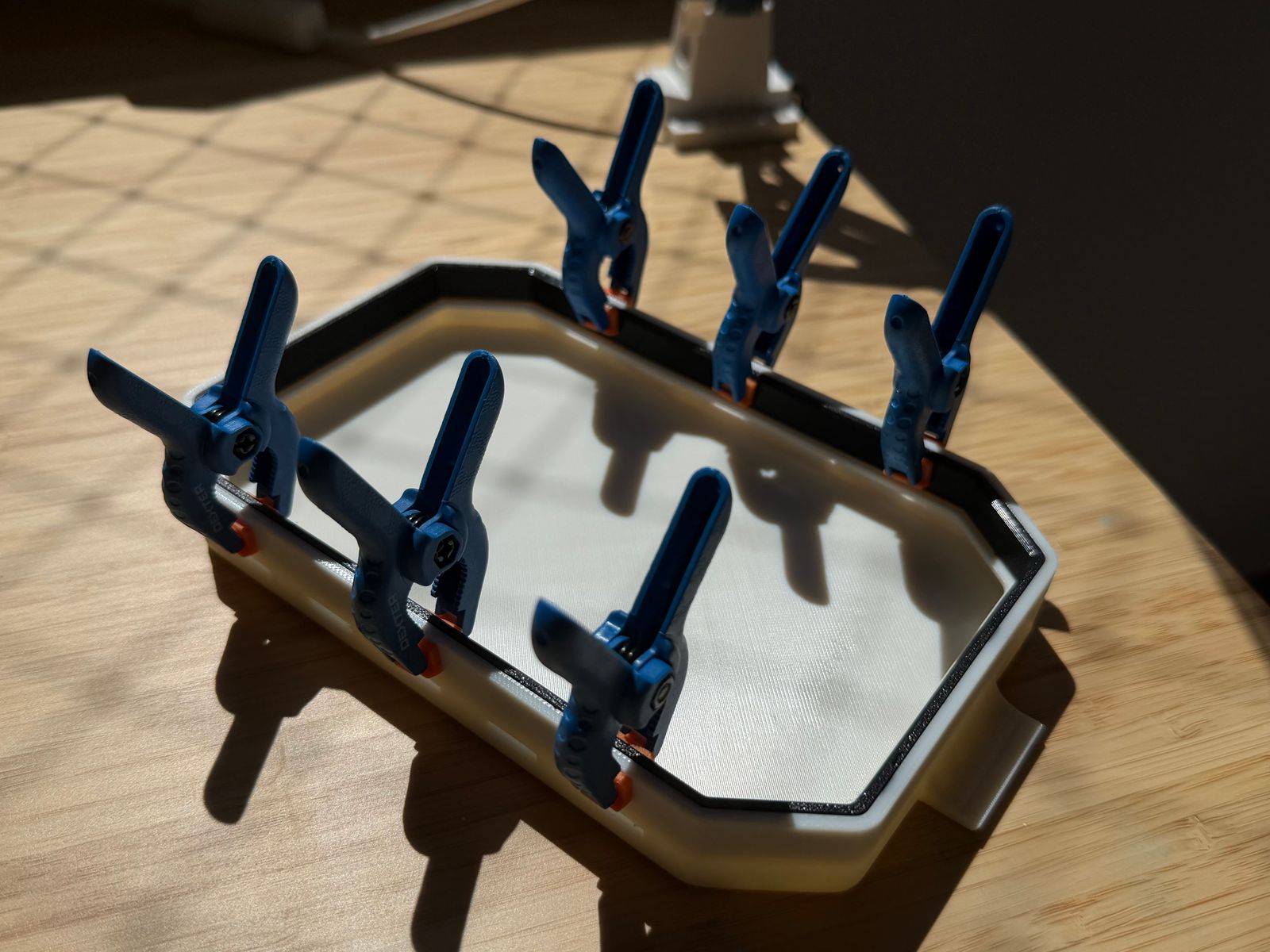
TPU 85A for the seal. The grip has to come from a material that gives. A rigid lip at 0.3 mm interference would either crack or refuse to go on; a soft one takes up the tolerance and lets the cover be pulled off with two fingers. It is printed separately and bonded into the shell with an adhesive chosen for the pairing.
White on purpose. A dark cover would reach a higher surface temperature in the same sun. Since the whole point is to keep heat off the display, the shell is printed in white so it reflects rather than absorbs.
Finishing is light: the shell corners are sanded by hand, then the seal is bonded and clamped while the adhesive cures.
The cover drops onto the screen surround and holds on its own, and comes off in one movement by the moulded tab. It lives in a pannier while the bike is moving and goes back on when the bike is parked. The owner has had it since.
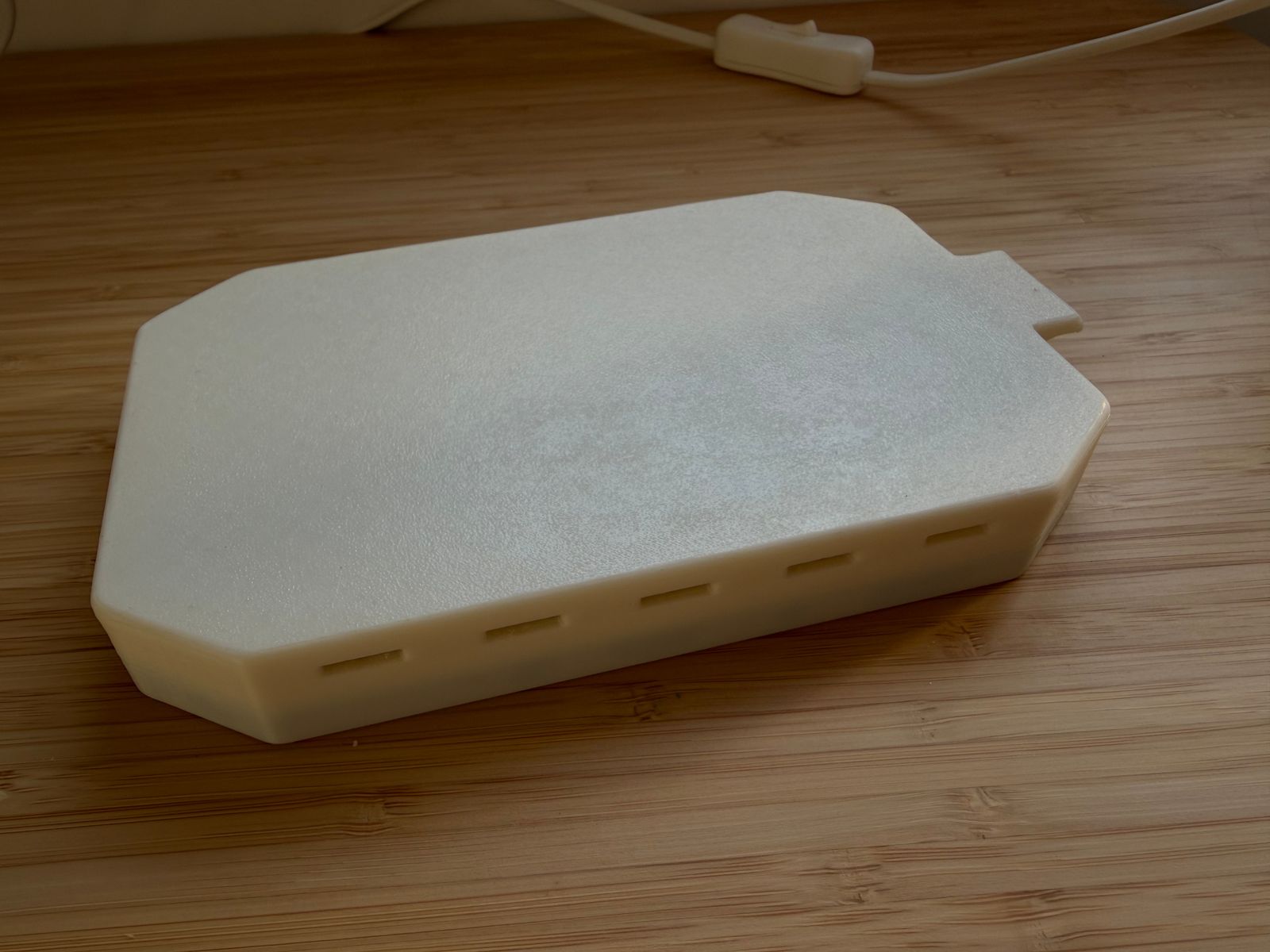
The CAD work for this screen exists now, so a second cover is a print, an assembly and a check, not a project. If you ride a Stelvio, you can have the same part.
Shipping in the EU quoted at cost, or collect it in Cascais.
Engineering a part like this from scratch starts at €120. This one is €59 because that work is already done.
Compatible with the Moto Guzzi Stelvio. This is an independently designed aftermarket part made by take-two studio in Cascais, Portugal. It is not an official Moto Guzzi part, and take-two is not affiliated with, endorsed by, or connected to Moto Guzzi or Piaggio & C. SpA. Brand and model names are used only to describe fitment.
No. As of 11 August 2026, Moto Guzzi's own accessory catalogue for the Stelvio lists cases, a windshield, guards, heated grips and electronics, but no cover or visor for the instrument screen. Hepco & Becker's Stelvio range does not include one either, and the two big aftermarket makers of TFT visors, Wunderlich and Touratech, do not list Moto Guzzi at all. That is why this one was made from scratch.
Not this one, because it is not sealed. The vent slots sit at two heights, so air moves through the cavity rather than sitting in it. The reasoning is in § 03 above.
No, because nothing in the cover reaches it. The TPU seal grips the surround from the outside and the stand-offs land on the metal bezel, holding the shell clear of the glass.
Yes. That is the studio's normal work. The Stelvio cover took measuring, CAD and a test print because nothing existed for it. The same route works for any instrument cluster, and for covers, trim, brackets and fittings that are discontinued or were never made. Send a photo of the part or the space on WhatsApp and we will tell you honestly whether 3D printing is the right answer. Anything in the frame, brake or suspension path we refuse.
We'll tell you honestly if 3D printing is the right answer for your part, and if it isn't, we'll tell you that too.