Replacement parts · Boats · Homes · Classic cars · Motorcycles

The part no longer exists. We rebuild it from what's left.

take-two is a solo 3D engineering studio in Cascais, Portugal, making custom replacement parts for boats, homes, classic cars and motorcycles — parts that are broken, worn, or no longer manufactured. The work is reverse engineering, not print-farm printing. The original is 3D scanned with a Creality CR-Scan Raptor, on site if needed, so the part never has to leave the boat, car or property. It is rebuilt in CAD, checked for fit, reviewed with you before printing, then printed on a Bambu Lab P2S and finished by hand. Materials are FDM thermoplastics: PLA for indoor visual parts, PETG for general-purpose fits, ASA for outdoor and sun-exposed pieces, TPU for flexible mounts and gaskets, ABS for indoor structural parts. Typical lead time is three to seven days. On-site scanning covers Cascais, Estoril, Sintra and the Lisbon marina area; finished parts ship worldwide. There is no price list — every job is quoted after a photo review. Send a photo on WhatsApp (+351 967 735 631) or email [email protected].

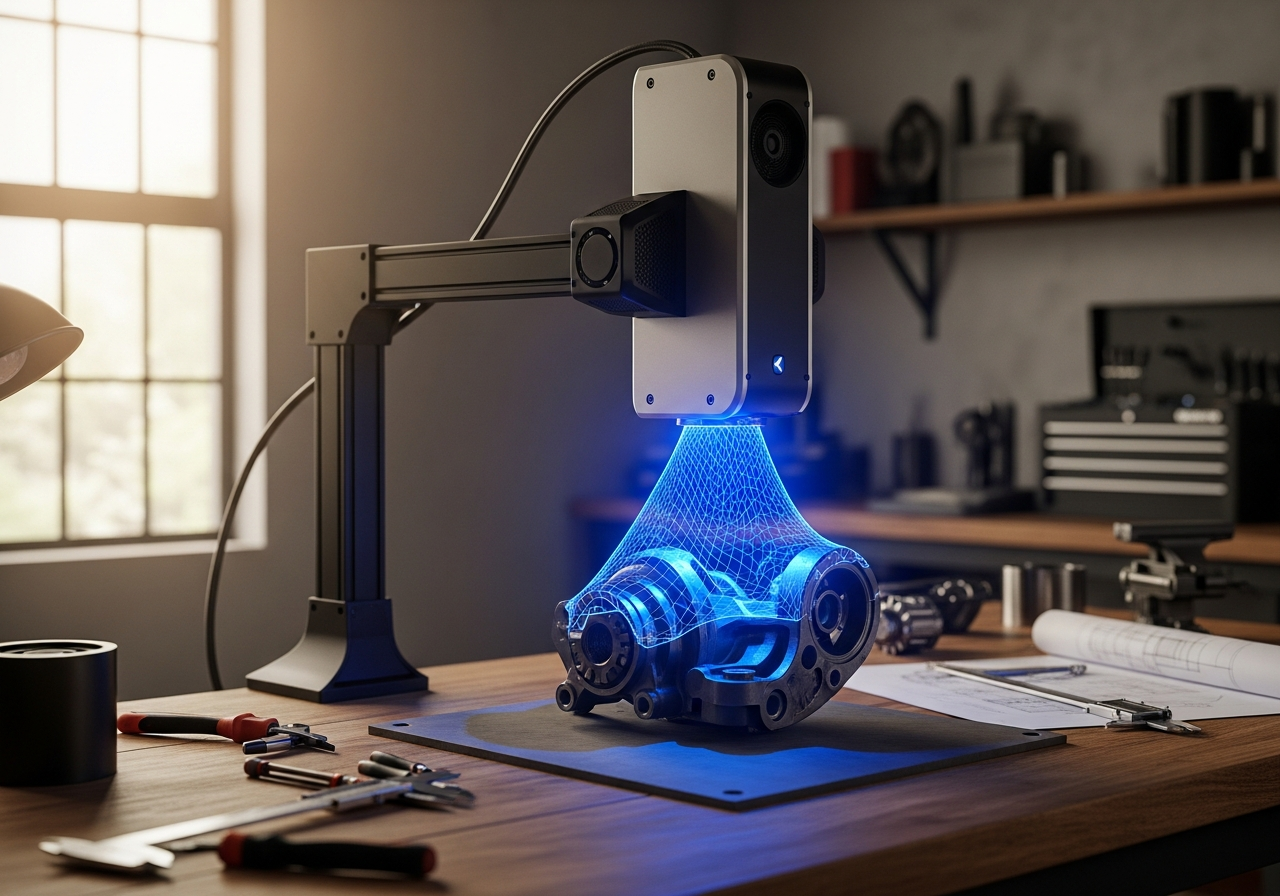
3D scanner capturing a part on a workbench at the take-two studio in Cascais. In the workshop
Reverse engineering

Can you remake a part that's broken or no longer made?

Usually, yes. If the part still exists in some form, even in pieces, we scan it and rebuild it. Missing geometry comes back from the intact surfaces, from the component it bolts to, or from your photographs. In most cases a broken original is enough to work from. What we can't do is invent a part nobody has seen.

Method

What's the difference between a CAD reconstruction and just printing the scan?

A raw scan is a mesh: triangles with noise, gaps, and no idea what is a hole, a thread, or a flat face. Print it and you reproduce the wear and the scanning error along with the part.

We treat the scan as a measurement, not as a model. Cylinders are rebuilt as cylinders, flats as flats, around real datums. In plainer terms: we draw the part as it was meant to be, and let the scan supply the sizes.

Fit

How do you know it will fit before you print it?

Fit is decided in CAD, not discovered on delivery. The model is built against datums taken from the assembly that receives it — the spigot it slides over, the hole centres it bolts through — and clearances are set for the material and print orientation. If a delivered part still does not fit, we re-print it. No questions.

Where the parts go

Four worlds, one process.

01/04 — Boats & marine

Marine fittings

Salt, sun and vibration finish off small plastic fittings long before the boat is done with them, and a union or hinge from a builder who has moved on is often unobtainable. We can scan at the berth.

Typical parts
Hose unions, hatch hinges, helm-station VHF brackets, cable pass-throughs, sailboat hardware
Material
ASA above deck, PETG for sheltered fits — UV stability decides it in the sun.
02/04 — Homes & property

Home hardware

Older Portuguese houses often have window and door hardware that is no longer stocked. One broken handle should not mean replacing every window on the floor, so we rebuild the original profile.

Typical parts
Replica window handles, door fittings, cabinet hardware, discontinued appliance knobs
Material
PLA for indoor visual replicas; ABS where the piece gets sanded and painted.
03/04 — Vintage & classic cars

Classic and vintage cars

Interior trim is often the hardest part of a restoration to source. A vent knob for a model out of production for decades is often impossible to source. We scan a surviving piece — yours, or the matching one from the other side of the dashboard.

Typical parts
Dashboard trim, vent knobs, interior fittings, parts for models out of production
Material
ASA behind glass, where cabin heat and direct sun would soften PLA.
04/04 — Motorcycles

Motorcycles

Covers, trim and fittings take the damage in a drop, and are often discontinued or hard to source. We rebuild in CAD rather than copying the damage, so mounting points come back square. Anything in the frame, brake or suspension path is refused.

Typical parts
Covers, trim, fittings, brackets and mounts that are discontinued or hard to source
Material
ASA for exposed bodywork, TPU where a mount should absorb vibration instead of cracking.
Materials

Which material should my part be printed in?

Material is chosen from where the part has to live. PLA for indoor visual parts and quick prototypes. PETG for general-purpose work, structural fits and modest UV exposure. ASA for anything outdoors or sun-exposed. TPU where the part must flex, seal or damp vibration. ABS for indoor structural parts, because it sands, fills and paints well.

A cabin knob and a cockpit fitting are the same shape problem and a different material problem. We say which we would use, and why.

Lead time

How long does it take?

Typical lead time is three to seven days: scan, CAD, review, print, hand finishing. Multi-part jobs and awkward geometry take longer, and we say so before starting. Studio hours are Monday to Friday, 09:00 to 18:00 WET, in English and Portuguese.

On-site

Do you come to the boat, or do I bring the part in?

Either. On-site scanning covers Cascais, Estoril, Sintra and the Lisbon marina area, so the part never has to leave the boat, car or property. Local pickup works too, and clients further afield send photos and measurements, or ship the part.

Quotes

What do you need from me to get a quote?

Not much. A photo of the part, a note on where it fits, and whether it lives indoors, outdoors or on the water. One known dimension helps if a ruler is to hand.

There is no price list — complexity, material and scan effort vary too much between jobs for one to be honest. Every project is quoted after the photo, and the estimate comes before any work starts.
Limits

What can't be 3D printed?

A good deal, and hearing so early is cheaper than finding out late. We don't make structural or safety-critical parts — nothing load-bearing, nothing holding pressure, nothing standing between you and harm. Printed thermoplastic belongs on trim, covers, brackets, fittings, handles, mounts and housings.

FDM thermoplastics only: no metal, ceramic or resin. One-offs and small batches — a one-person studio, not volume manufacturing. Nothing that infringes someone else's intellectual property: no counterfeits, no branded logos, no regulated safety components. If 3D printing is the wrong process, we'll say so and point you towards what is right.

Trade supply

Do you supply workshops, chandleries and boatyards?

Yes. Marine service companies, chandleries, boat managers, restoration shops and property managers can send the photo and keep the client relationship themselves. Quotes usually within 48 hours, invoiced monthly on request.

Take two

Send us a photo of the broken part.

A photo on WhatsApp is enough to begin. We'll tell you whether the part can be rebuilt, which material it should be in, and what it would cost — before any work starts. If 3D printing is the wrong answer, we'll say that too.

Alongside replacement parts, the studio takes on occasional custom design commissions. See the design work →